Jamieson Wolf
Number-one bestselling author
The Drowning of Arthur Braxton by Caroline Smailes

Mythology is as old as the sands of time themselves. It is where our history started, our belief systems began, where story came from. They influence our habits, whether we know it or not, are reflected through history in a variety of different ways.
The Drowning of Arthur Braxton by Caroline Smailes is a new myth for the modern day-it is a twisting and entwining of the Greek myths of Apollo and Daphne, Pollux and Castor, Jason and Medea.
Smailes has created a tapestry of a story, an interwoven narrative that is entertaining in its own right. However, the awesome bit is that, if you know your history and myths and legends, the story takes on a new kind of resonance.
Instead of being a bland retelling of a myth, it becomes something of its own. Trust me on this one. I recently sat through a play set around Ovid’s myths. The stage was a two tier pool. The top one was in the centre of the stage with space in between where the actors would appear.
The actors really swam in both pools of water. The backdrop to this play was a dark and haunting electronic lines of blue and white-think Matrix here. The music was really amazing (except when there was singing) and the design incredible.
That is the kindest thing I can say about the play. I did however picture that set when reading The Drowning of Arthur Braxton. I have never been inside a proper bathhouse, so I wouldn’t have anything else to compare it to. I can only hope the author can forgive my imagination.
Smailes had typically written about troubled people before. Her debut, In Search of Adam, was about a girl trying to find herself. Black Boxes was about a woman who wanted to lose herself. Her third novel, Like Bees to Honey, an international best-seller, was about a woman who went looking for what she left behind.
That’s what makes The Drowning of Arthur Braxton different: its voice is predominately male. Make no mistake, you will meet many people in these pages. You have Arthur Braxton, neglected at home and beat up at school. He meet Delphina and Laurel in an old abandoned public bath that hides some pretty terrible things; and there’s Silver. Always Silver. It is the story of Kester and Pollock, two old men with a secret, it is the story of the world and the refuge that Arthur finds at the Oracle.
He is entranced with the always swimming Delphina. He skips school to spend time with her. In doing so, he finds himself falling into modern day myth that was part comedy, part romance, part coming of age. Oh, and it a myth, so you can’t forget the tragedy.
I ached for Arthur, that is how brilliantly Smailes has written his story. I also cheered for him, yelled at him, thought of him, hoped for him. He was someone all of us know, that all of us have inside us. We are always trying do to whatever we can to fit in, even if it will cost us what we love most. At least we were-everyone remembers high school right? His story if incredibly well told. If I didn’t know the name on the cover, so convincingly has the author told Arthur’s story.
Caroline Smailes has always delivered and her stories always have a character that you’re drawn to. First it was Jude and then it was Ana and Nina and in her eBook novella, 99 Reasons Why, we are given the story of Kate. Her protagonists and their story are her greatest achievement. From the first page her characters grab hold of you, the story sinks into you and then you are held enraptured. For a little while afterwards, everything you try to read doesn’t draw you in. You are left haunted by the story for a little while and want to read it again; at least I do.
The Drowning of Arthur Braxton is no exception, but it is the first time Smailes has chosen to write mainly from the point of view of a male. It’s a bold move. Something that takes the book into the stratosphere. Think of the brilliance of The Fault With Our Stars by John Green, anything by Meg Rosoff (especially There is No Dog), mix in a little Christopher Moore (particularly Sacre Bleu and Fool) and you’ve got something that is close to the brilliance of this book.
When I first started reading, I wondered what story Caroline Smailes had gifted us this time around. Instead, like a very good story, after a few words, I stopped wondering and just enjoyed.
The Drowning of Arthur Braxton is a brilliant retelling of myth, a fantastic reference to pop culture with a bit of magic thrown in. If Caroline’s intention was to put a spell on the reader, the consider me spellbound. I urge you to pre-order this book, no, I implore you. I want you fall under the spell that her novel creates.
Like all good myths, The Drowning of Arthur Braxton by Caroline Smailes goes on the keeper shelf. It’s a modern classic on par with The Wizard of Oz or Harry Potter or The Hunger Games.
All I can tell you is to read this book. That it is a beautiful story incredibly told. I can’t wait to fall under its spell a second time.
99 Reasons Why by Caroline Smailes
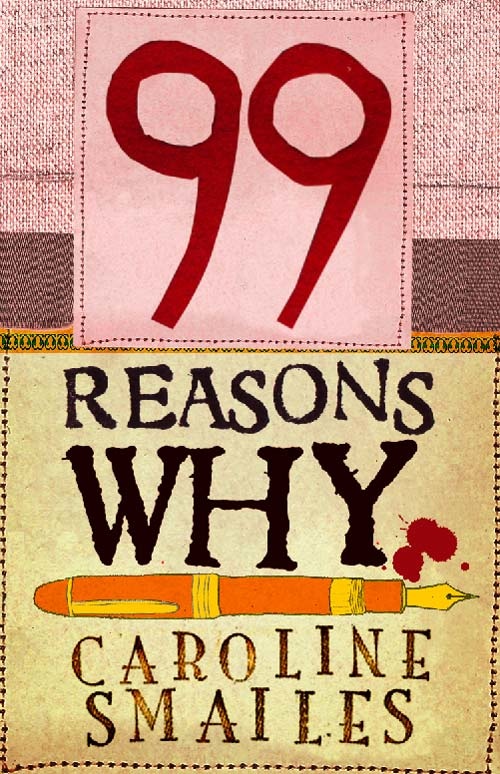
It’s no secret that I love all of Caroline Smaile’s books. Each one of them is so different, so incredible, that each book has stayed with me long after I’ve read it. Her new novel, 99 Reasons Why, is no different.
In 99 Reasons Why, we meet Kate Jones. Kate isn’t like other twenty two year olds. She lives with her mother and her father and has a very important job to do for her Uncle Phil. She sits in her window every day and observes the goings on at the Kevin Keegan Day Nursery. Every day she writes down the comings and goings of the nursery in her notebooks.
One of the children, a little girl in a pink coat, catches Kate’s eye. She wants the little girl for herself. It’s when her mother and her Uncle Phil begin to make plans to steal the little girl in the pink coat for Kate that things begin to go awry.
The little girl in the pink coat’s father, Andy Douglas, has caught Kate’s eye as well and she wants him badly, even though her past experiences with love haven’t turned out so well. Then there’s the fact that she is Princess Diana’s daughter, her father is driving an illegal taxi, her mother is sleeping with Uncle Phil and she will soon have her very own child.
It’s a lot for a girl like Kate to keep inside. Sometimes she feels as if her head will burst with all the secrets that she must keep. However, even the most feared secrets will find their way out of the darkness and into the light.
When that happens, Kate’s small, carefully organized world begins to unravel. And then eveyrthing goes to hell in a handbasket, faster than Kate can order a Princess Diana commerative pin from eBay…
99 Reasons Why is an absolutely amazing read from start to finish. Caroline Smailes has penned an incredible story with one of the most fascinating characters ever to grace the printed page. Except, 99 Reasons Why is a novel with a difference.
There are eleven endings to 99 Reasons Why. Nine are included in the eBook and you get to choose your own ending to Kate’s story. If you read the book on your Kindle, you will be asked a series of questions to determine which of the nine different endings you will read. If you’ve got an iPad (like I do), you get to spin a wheel and leave your ending up to chance.
This would be a great gimmick if the writing wasn’t so amazing. Caroline gets better with every novel and 99 Reasons Why is her best yet. Even without the interactive feature of the eBook, it’s an amazing, heart breaking, harrowing read. It’s also quite funny in parts, which gives the book an incredible amount of depth. There is every emotion in the novel’s pages and when you finish reading, Kate will stay with you as will Caroline’s incredible writing. She has a way of making the mundane seem extraordinary. Combine all that with the interactive part of the eBook and you have something that is beyond incredible. Kate is not an ordinary girl, 99 Reasons Why isn’t your ordinary kind of eBook it succeeds on every level.
What I love most about the book were the characters and their story. Caroline writes it so well its as if we’re right there with Kate, going along for the ride. The novel pulls you in from the first page and doesn’t let you go until you finish it. After I read the first ending (I got number 3 on my first go), I went back and read all the others.
In short, 99 Reasons Why is incredibly brilliant in every possible way. It’s a fantastic story told in a revolutionary way. I started the novel on a Friday night and was done by Saturday. 99 Reasons Why is so good that I’m already half way through it for the second time.
Make no mistake: this is a dark thrill ride of a novel that will leave you with a jaw dropping ending (or a few of them) and Kate will stay with you long after you’ve finished 99 Reasons Why. That’s the power of a true storyteller and its something Caroline Smailes has in spades. Deft, funny, haunting and harrowing, 99 Reasons Why is amazing 99 times over.
FREAKS! Written by Caroline Smailes and Nik Perring, Illustrated by Darren Craske
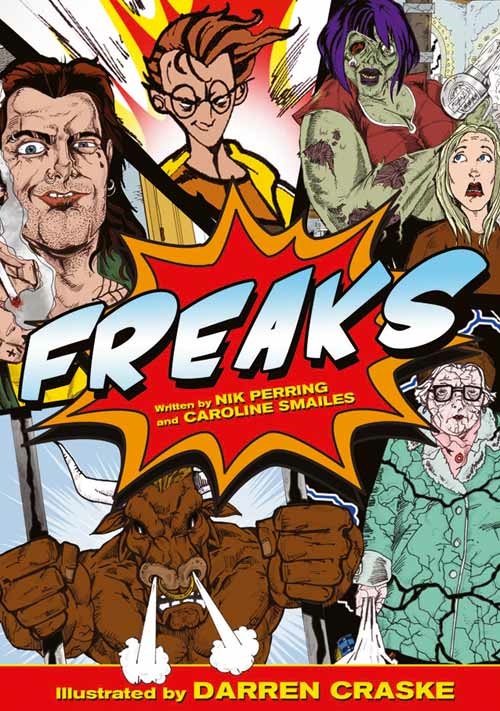
Everyone dreams of having a superpower. Me? I’d love to be able to fly so I could avoid rush hour traffice or be able to remember each book I’ve ever read in its entirety. Everyone has also felt like a freak at one point or another in their lives: not fitting in, not being accepted, not part of the norm.
There are people, however, that we would classify as real freaks, not able to intermingle with society, keeping to themselves. You’ve seen these people: they fade into the shadows, they keep to the sidelines, they are quiet and speak rarely.
Everyone has been a freak at one time or another. That is what makes FREAKS! written by Caroline Smailes, Nik Perring and illustrated by Darren Craske so amazing. They have created a book that is for each and every person who has never felt as if they fit in anywhere.
FREAKS! is a collection of 50 short stories, some written by Caroline, some written by Nik, some written together. The stories are illustrated by wonderful drawings by Darren that bring the story to life in a way that transcends the short story genre.
Part collection, part comic book, part darkness, part hilarity, FREAKS! is a book that goes beyond the short story genre and makes it something all the more incredible.
I knew from the moment that I looked at the cover of FREAKS! that I was in for a treat of monumental proportions. Eschewing the traditional short story, the ones contained in this collection are flash fiction pieces, stories told in comic book form, stories told in mere paragrahps that pack whole pages worth of emotion into very few words.
I read FREAKS! in less than a day. I simply could not put it down. All the stories feature people with superpowers, real or imagined, and give us a brief look into their lives. Some of the stories are funny and downright hilarious, some end with a punch to the gut, some take a twist in the middle and leave you shocked. Others are haunting, harrowing and dark. However, all the stories in FREAKS! are beautiful.
I had a very personal reaction to this collection. I have always felt like a freak, as if I don’t belong, as if I was put on this earth to do something but had no idea what it was. I’ve always felt as if I was outside the norm and have never been sure if the norm was something I wanted to be a part of anyways.
In reading FREAKS! I felt as if I was reading about people I knew. I even recognized myself in a few of the stories. The stories, the characters, feel so personal, as if we are being presented with a moment in the time of their lives. I ached for this book of freaks and wanted them to know it was okay to be who they were.
Though short, the stories are written so well and so deftly that no further words are needed. Caroline Smailes and Nik Perring have outdone themselves with their stories; each can be read in a few minutes, but all of them will stay with you long after you finish reading the collection.
The illustrations are another amazing thing about this collection. Darren Craske has outdone himself, bringing the freaks to life in fantastic black and white illustrations that help the characters to jump off the page. The illustrations are so good that I felt I was reading a pulp comic book from days gone by. The stories are amazing and the illustrations just add to the over all perfection of the book.
I finished reading the paperback book yesterday morning and am reading the eBook now. While I love eBooks and primarily read everything on my iPad, FREAKS! is a book that you will want to hold, a book where you will want to thumb through the pages. Though I love eBooks, do yourself a favour and get the paperback. It’s well worth double the price you’ll pay for it as the stories will stay with you forever.
Whimsical, haunting, hilarious and harrowing, FREAKS! is like nothing you have ever read or will read afterwards. FREAKS! has turned the genre of the short story into a revolution. The literary world will never be the same again.
Like Bees To Honey by Caroline Smailes
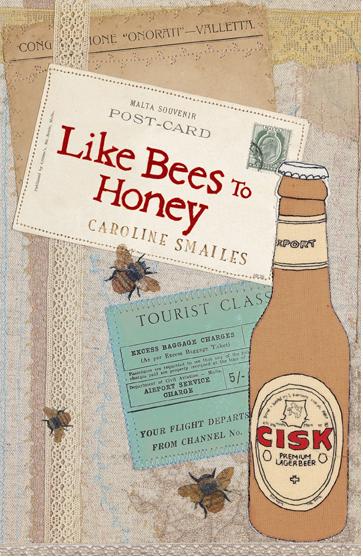
What happens when you can’t let go of your grief? What happens when it consumes you? When it becomes all that you have left? What do you do? Where do you go? What do you become?
Nina has left her husband Matt and her daughter Molly. She is going back to Malta with her son Christopher to visit her parents one last time. But she is also going home to Malta to confront the ghosts of her past.
Ostracized and cut out of the family when she became pregnant out of wedlock, Nina seeks to mend her relationship with her parents; and if she is lucky, she will be able to mend her heart.
But Nina carries with her more than just hope and grief over her past. Nina carries with her a secret that, should she choose to acknowledge it, will shatter her world even further.
When she arrives in Malta, there is more than just her past waiting for Nina. There are also the dead.
Malta has always been a stomping ground for spirits; and Nina has always been able to see them. A seer from a young age, she has always seen the dead that come to Malta to heal. But now the dead come to her so that Nina can begin her healing.
Can Nina let go of her past to embrace the future? Or will her grief swallow her completely? With help from the most unlikely of beings, Nina might have a chance at redemption…
There is so much I want to say about this novel, but I don’t have the right words to do the novel justice. Not only the novel a beautiful story about love and loss, grief and circumstance, it is also a haunting reminder to live life to the fullest every single day we can.
Smailes, who is no stranger to delving into the darker side of the human psyche, has given us a multi-faced heroine in Nina. Here is someone we can ache for, someone we grow to care about and grow to know over the course of a novel.
You would think that someone obsessed with her grief would grate on your nerves, but that is not the case here. Smailes juggles Nina’s emotions with a deft and subtle grace that leaves the reader not only empathizing with her but sympathising with her as well.
Everyone has done something they regret. Everyone has lost someone they love. Smailes manages to tap into that vein and give us a novel that is filled with real, true emotion captured on the page. Like Bees To Honey is so good that it took my breath away.
I was surprised by how funny the novel was. You would think a novel about the darkness of grief would be hard going, but that’s not so. The novel is full of emotion, yes, but it is such an incredibly human novel. It reminds us of what matters, of the simple things that bring joy. Like Bees To Honey is beauty captured on the page in words.
Like Bees To Honey is also a novel about language. Much like Smailes earlier novels, language plays a big part in Nina’s unfolding story. Nina feels that she has lost her language, that she has lost her home. She tries to find it again in speaking her mother tongue. Maltese is sprinkled through out the novel with handy translations for those who don’t speak it.
The language is almost like the music of the novel. Each time I found a Maltese word, I found myself repeating it, wondering at is shape and it’s sound. Smailes, who is conscious of every word on her page, has placed these words notes, this word music, through out the novel, giving it perfect pace and perfect pitch.
I think the thing that is so delightful about Like Bees To Honey is that everything about it is so completely unexpected. Nothing is as you think it is and the story will not go at all how you think it will. Surprises wait for you, and for Nina, around the turn of every page. I was surprised by Like Bees To Honey constantly and each surprise was a lovely shock to my system.
It’s been such a long time since I’ve been so emotionally affected by a novel. Like Bees To Honey not only touched my heart and my emotions; it touched my spirit.
And it refuses to let go.
Beautiful, funny, moving and haunting, Like Bees To Honey by Caroline Smailes is no mere novel. It is a gorgeous, life changing experience, just waiting to enthral you with its beauty.
Let Like Bees To Honey cast its spell over you. It will haunt you well after the last page is turned.
Black Boxes by Caroline Smailes

Ana Lewis is a woman on the verge of collapse.
When her lover Alex leaves her, Ana begins to fall into a spiral of depression that consumes her from the inside out. Avoiding the world around her, she instead cocoons herself inside of her room, ignoring the world outside of her bedrooms four walls. Inside her black box.
However, this means she is ignoring her two children Pip and Davey. They are both held within their own black box, their own seclusion. Without their mother to look after them, Pip must look after herself and her younger brother and find a way for them to survive in a hostile environment.
Ana, inside her black box, knows none of this. Medicated with sleeping pills and painkillers, she begins to meticulously piece her life with Alex back together in order to find out where she went wrong. She tries to piece together the puzzle that is her life in order to find solace. She must confront the demons of her past if she is to understand what she has become.
Pip must also confront her own demons. She suffers increasingly cruel torment from bullies at school. Ridiculed and shunned, she is made the brunt of jokes, of insults of assault. Not like the rest of the children at school, she is on the outside looking in on the life she wished she had.
When the two black boxes collide, the resulting crash will change their lives forever…
My meager plot description does nothing to capture the true story of Caroline Smailes novel Black Boxes. There is no way that I could come close to even capturing a tenth of the emotion, the power of the words or the beauty of the writing. The book is just too good to sum up in a few short paragraphs.
When I opened Black Boxes, I had no idea what to expect. I knew that the novel would be remarkably different than In Search of Adam, Smailes’ first novel. While both novels are incredibly different, both deal with the darker issues of life: pain, suffering, neglect, abuse, sex, death, secrets, suffering and redemption.
Black Boxes is not an easy read; but its impact reaches further because of this. Caroline does not shy away from the difficult and dark issues of life and I wouldn’t want her to. There is such a vibrancy and truth to her words, to Ana and Pip’s story, that the words themselves seem to live off of the page.
The novel itself is split into three parts. Parts one and three are Ana’s black box. Part two is Pip’s black box, her diary. For me, it was Pip’s voice that had the most impact. The torment she suffers at school and at home made me cringe. But it also made me want to keep her safe, to protect her. It made me want to wrap my arms around her and tell her that everything would be alright. The things that Pip goes through are so awful, so incredibly painful that you can’t help but feel your heart go out to her.
I had the same feelings for Ana. I found it difficult to like Ana at the beginning. She seemed like a horrible mother: she neglected her children and let them suffer, choosing instead to isolate herself from the world. But as I read more of her black box, as she told me more of her story, my heart went out to her too.
Though Alex was cruel to her, Ana loves him. Though he mistreated her, hit her, abused her, degraded her, she still loves him. Ana’s love for Alex is all encompassing and, though he never loved her, she loves him completely. It is her love for him that is tearing her apart, Ana’s love for him that is her sole purpose for living. As she recounts her life, reliving her torment at his hands, she still professes her love for him.
As much as I wanted to, I couldn’t hate Ana. Having never known love, having never known kindness, she was broken inside. How can you hate someone who loves someone else so completely but does not have enough love for themselves?
As the story unfolded, as more and more secrets were revealed, I was held spellbound by Caroline Smailes’ words. I was held pinned to the page and couldn’t stop reading. Though I knew that the book would end horrible (indeed, there is no other way for this book to end) I had to keep reading. I kept hoping that Ana would find peace, that Pip would be all right.
Though the story is dark, it is beautifully written. Indeed, what struck me most was Smailes’ use of language. Through out the novel, language plays a pivotal role in the development in the story. From the very first page, when we are given a definition of Context and Black Boxes, you know that this will be no ordinary novel.
Through out Ana’s story, she refers again and again to etymology. Not knowing what etymology was, I had to look it up. The dictionary defines etymology as: The derivation of a word, an account of the history of a particular word or element of a word or the study of historical linguistic change especially as manifested in individual words. You know that words have meaning for Ana, that language holds power for her.
Her daughter Pip also uses language. Pip and Davey communicate through sign language, a silent form of communication. Through out the book there are many words that are spelt out in hand symbols that spell out words in sign language. Don’t know sign language? That’s okay. Smailes has provided the complete sign language alphabet on the endpapers. The use of sign language is a pivotal plot point and gives such depth to the story. Though the words spelt in sign language are silent, they have more meaning because of this.
In the end, Black Boxes is without a doubt one of the most heart wrenching, harrowing, shocking novels I have ever read. It is also one of the most beautiful. The writing pulls you in and never lets you go, even after the last page has been read and the black box is closed. The words continue to haunt you well after the story is finished. More than anything, Black Boxes proves that happiness is indeed a state of mind.
Black Boxes is the best novel I have read all year. I laughed, I cried and I cried some more. And came away a changed person. Though Smailes asks a lot of the reader to read Black Boxes, every page, every word is worth it. I know that I will carry Ana, Pip and Davey with me wherever I go now, that they will haunt me. Black Boxes is one of those novels that, once you read it, you will never be the same.
Like Pandora’s box, once you open Black Boxes, it will be hard to close it once more.

Buy Little Yellow Magnet from Amazon and Kobo!
Jamieson Wolf has written a compelling story about navigating multiple sclerosis and cerebral palsy. His story will touch your heart, make you cry, then laugh, and inspire you. A touching memoir with a bit of magic…and tarot! ~ Theresa Reed, author of The Tarot Coloring Book
 Jamieson Wolf