Jamieson Wolf
Number-one bestselling author
Family Is Everything – A Flash Fiction Story
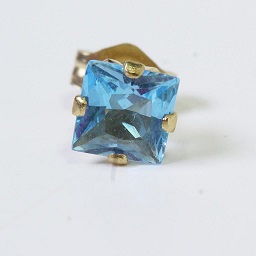 “Tell me the story again, papa.” Chloe pointed to the trinkets that he kept on the shelf behind the cash register. “The one about the earring.”
They were seated in his tobacco shop and the last customer had left. The bell still rang every now and again, but her papa said that this place was haunted. She breathed deeply, and the mingled scents of the tobacco was like perfume to her.
“You want to hear that again? I’ve told you that tale over a hundred times. There are lots of other trinkets there.” He said, giving her a smile and gesturing to the other treasures: a little toy car with only one passenger, a woman’s compact mirror that was made of pearl; a necklace that was made of the brightest jade.
“No, papa, the story about the earring. Please? It’s the loveliest.”
Looking into her bright blue eyes, he knew that it was the only tale that would soothe her. “All right love, but another story tomorrow night, okay?”
“Okay, papa.”
“Well, there was once a woman that ran this very shop with her husband. Lacey was very beautiful and very sad. She had hair as red as fire and eyes as bright as emeralds. Lacey was sad because her husband and her daughter were lost at sea. She was always clutching an earring. She had given the other one to her husband so that, if they were lost, it would call them home to her.”
“That’s sad, papa. Did it work?” Chloe asked.
“Well, when Lacey was not working the store, she wandered at the edge of the water for days and weeks, hoping against hope that they would come back to her. She heard many tales from the other villagers of what had happened to their ship: a group of pirates had taken the boat, it had been led astray by a group of sirens, it had entered into a fog, never to be seen again.”
“What did happen, papa?”
“Lacey continued to wait. She pined for her husband and was a mix of hope and sadness both at the same time. She had waited for so long and the anguish had wasted her away. Lacey was no longer the young woman she had been. Still, she waited for her husband and child.”
“That’s sad, papa. I don’t like this part.” Chloe said softly.
“It’s all right poppet, it’s almost over. Lacey was very old now, so old that her bones creaked like the sea when she moved. One day, she felt her life seeping out of her. She sat here, behind the counter where you and I are now. As her last breath left her, she saw two spirits come through the door of her shop. At long last, it was her husband and daughter and they came to her side. She was overjoyed to see them, even though she could not touch them. Her hand moved right through them. Lacey let her last breath leave her and left her body, finally able to join the man and child that she had lost so long ago.”
Chloe gave her father a bright smile. “That’s lovely, papa.”
They heard the tinkling of the bell again and turned to see who it might be…
* * *
Anna opened the shop door, Stephen close behind her.
They both saw the earring floating through the air and the outlines of two people, a man and a girl upon his lap, before they faded away like smoke.
Turning to Stephen, Anna said “See? Didn’t I tell you that this place was haunted?”
Stephen walked into the centre of the tobacco shop and picked up the ear ring that had fallen to the floor with a soft click. He held it in the palm of his left hand. “It’s so cold.” He said. He handed it to Anna who put it back on the shelf with the other trinkets: a little toy car, a woman’s compact and a necklace.
“Why do you keep those things? Why don’t you just get rid of them?”
Anna shrugged. “The store belonged to my great grandmother.” She held the other earing in her palm, almost entranced by its bright blue stone. “It’s funny, but I feel so connected to her, especially with these earrings.” She made a face. “I know, I’m being silly.”
“No, not silly.” Stephen said. “Family is everything.”
* * *
Anna woke later that night.
The wind was loud tonight. It whistled outside of the apartment window. She lived over the shop. It was a fair-sized place and she owned the building. Sometimes, she could hear the laughter of a child within the walls of this place, the sound of a soft lullaby being sung to a child.
Unable to sleep, she walked downstairs to the tobacco shop. She went right to the trinkets and the earrings that lay there. Even in the darkness, they seemed to glow. Entranced, she held them for a moment and then put them on.
She rummaged around in one of the drawers and found an old hand mirror. Turning the mirror face up, Anna went to look at herself and let out a small sound of shock. There was another face looking back at her in the mirror.
Anna moved her mouth and so did the other woman in the mirror. She was frightened now. She touched her face but did not see a hand in the mirror.
“I’m so sorry.” The woman in the mirror said. “Family is everything.”
Anna knew a moment of pure bliss and then she was gone.
* * *
Wearing the skin of another, Lacey called out to the shadows. “Hector? Chloe?” She said. “You can come out now. Mama’s home.”
The spirits came at her call and she held out her arms wide.
Family is everything.
Hallowed: The Elementals Book One – OUT NOW!
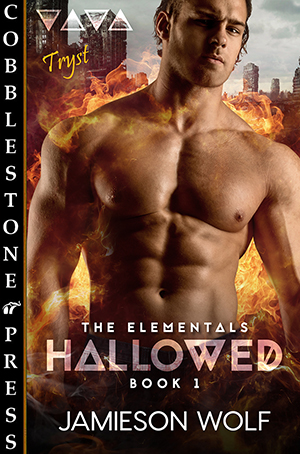 Oh, happy day! I have a new book out!
Here’s a little bit about Hallowed: The Elementals Book One
The world has moved on. A virus wiped out most of the Earth’s population and only a handful of people survived. Percy is one of those survivors. After getting a fever, he survived with only a red mark on his arm. When another man knocks on his door with the same mark on his arm, Percy has no idea how crazy his world is about to become…
You can get your copy here:
http://www.cobblestone-press.com/catalog/books/hallowed.htm
This is the first of five books in The Elementals Series. The books follow the stories of survivors of the plague…and what they can do to bring life back to the planet. Each of the books focuses on a different couple from that group of survivors. This is Percy and Colin’s story.
A little bit of a side note: originally, the mark that Percy has on his arm was supposed to be the Deathly Hallows. I’ve worked all kinds of book references into this novel and the next four books as well. All the names are from Harry Potter characters, or variations of those names.
I thought it would be kind of cool to have only the book loving geeks survive an apocalypse. The Geeks will inherit the Earth, after all. That was the original idea, however, during edits, I had to change what was tattooed on Percy’s arm, which in turn changed the series slightly, thankfully for the better.
If you read Hallowed: The Elementals Book One, I truly hope you enjoy it. You can get your copies here:
http://www.cobblestone-press.com/catalog/books/hallowed.htm
Stay tuned for more news!
You Are My – A Poem
You are my Penguin,
helping me step across
difficult terrain and
making sure my every step
is true.
You are my Beaver,
and together we have
built a home that weathers
every storm. You give me
only safety.
You are my Swan,
and you have helped me
to look into the water
and into myself to know
only beauty.
You are my Wolf,
standing by me as we
venture through the dark forest,
showing me that there is nothing
to fear.
You are my Goose,
helping me to fly beyond
all that I thought possible,
and to achieve
my dreams.
These animals all share
a bond that lasts
for life just as we do,
taking each moment that we share
as the gift that it is.
You are my gift,
Husband, Lover, Friend;
You are everything that
I’ve dreamed of
and more.
I am so
thankful for
you.
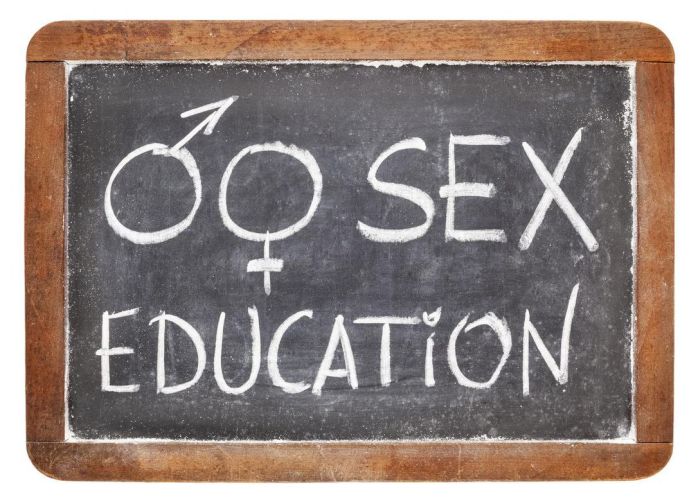
Back in the Closet – The Sex Ed Curriculum in Ontario
Recently, under new progressive conservative leadership, the province of Ontario has reverted back to a sexual education program that has not been taught since the 1980’s. I normally don’t get involved in stuff like this, but if we don’t use our voice, we lose it.
I’ve sent the letter to Lisa Thompson. I don’t expect a reply, but at the very least I’ve had my say.
Dear Lisa Thompson,
I was horrified to hear that the sexual education curriculum would be reverting from its current inclusive structure to favour the older, non-inclusive style of teaching. As a gay man, I find this very disappointing.
When I was taught sexual education, I already knew that I was gay. I knew from a very young age that I preferred boys instead of girls, only I wasn’t given the words or the knowledge of who I was until many years later.
My sexual education focused on heterosexual intercourse. There was nothing about being gay or lesbian, trans or queer. We were not taught about consent or same sex marriage. We weren’t taught about bullying or body shaming. We were taught none of that.
I remember when sexual education was started. I was in grade five and I was ten years old. I had already known for two years that I was a homosexual. I already knew that I was different from the other kids.
During one class, one of my other classmates put up their hand and asked about two women or two men being together. I was amazed at her bravery. I had been quaking to ask about two men, but I had not been courageous enough. The teacher very politely and gently told her that this was wrong, that a woman should only be with a man. That was the extent of sexual education about myself as a child.
As I grew, the world changed around me. Gay marriage became legal and there were a plethora of other genders and sexual identities that came to light. Even as an almost forty-year-old man, I am learning about them and what those genders and sexual identities mean. Are we to deny our kids the same right to that knowledge?
With knowledge comes power. Reverting to the old sexual education system only makes sure that they will not have that knowledge. They will know nothing of consent, gender identity, gender-based violence, homophobia. Under the old education system, the children will not even learn about the legalization of homosexuality and the celebration that this was. It is as if you are asking me to hide who I am once more like I did when I was eight years old.
The world can be a dark place sometimes and it’s up to us to arm our children with the light that will see through the dark. I implore you to arm children with the knowledge that they should have in this world. For with that knowledge, they have the power.
Thank you for your time,
Jamieson Wolf
My Story – On Learning to Sparkle
I recently watched Nanette by the incredibly talented Hannah Gadsby.
Since viewing the program, I’ve been moved to share my story. Nanette was comedic, yes, but it was also gut wrenchingly honest. I know this isn’t the kind of thing I typically share on my blog, so I hope you’ll forgive me and read it anyway.
My Story – On Learning to Sparkle
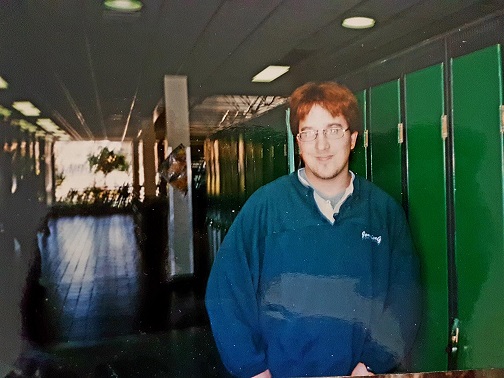
I was raised to hate myself.
My father hated everyone and everything. He hated black people, he hated Hispanics, he hated people of Lebanese descent (which was saying a lot, as I am part Lebanese). He hated the elderly, calling them a drain on our resources and he hated the young, calling them a blight on society. However, he had a special hatred for homosexuals.
One time when we were in what was then Price Club, he was served by a man wearing gold hoop earrings. When we walked away from the counter after my father had made his purchase, he remarked to me: “Fucking faggot. Did you see them faggoty earrings? Bet you he likes to take it up the ass, too! Fucking faggot.”
I began to lie in wait for this faggot who seemed to have mythical powers, able to turn boys into faggots at will with the powers of their mind, leading them into a life of sin. I was also not allowed to be an altar boy growing up because my father believed that the priests in our church molested minors.
I knew what I was when I was eight years old. I only knew one word to describe myself and it was my father’s: faggot.
I didn’t want to be one. However, everything I did pointed towards what I was and who was hiding within my skin. I remember in Beavers, we were tasked to make something out of found objects. Other boys made some kind of truck or monster or flying machine. I made a beautiful doll who was going to be married. I had fashioned a body out of a discarded tube and fashioned a head and arms. I painted on a face and then created a dress for her out of lots of white fabric.
One of the leaders was very impressed. “That looks like the dress that I wore to my wedding,” she said. I felt a brief moment of joy for creating something so beautiful. The moment was fleeting. All the other boys were looking at me in abject horror.
It seemed that no matter what I did, my gayness would find its way out. I thought that all the boys could see the sign above my head that read Faggot.
I doubled my efforts to fit in, to be “normal,” to be just like everyone else. As I grew older, I had girlfriends. I did love them in my way, but ultimately, I hoped to hide who I was. I hoped in the end that they would convert me—I hated myself that much. I wanted to carve it out of my skin, out of my blood. I didn’t want to be myself. I didn’t want to be me.
I hated myself so much, hated what I perceived as my weakness. I hated everything about me, my homosexuality most of all. I knew that I would never be accepted as I was, knew that there was something wrong with me. I wished feverishly to be like other boys, to try to fit in, to reduce my sparkle into so much dust.
At one point during high school, I resorted to self-harm. I imagined that with each cut of the knife, each scrape of skin that drew blood, that my gayness would be able to bleed out of me. One night, I sat with a knife and had my bare wrist facing me, begging to be cut again, for the final cut. I hated myself so much that I didn’t want to be alive anymore. It didn’t help that I was still living in the house of my father, that his view of what I was coloured how I saw myself. It took all of my willpower to put down the knife that night. Thankfully, before the self-harm could go very far, one of the guidance councillors noticed the marks on my skin and had me start therapy.
I was in my early teens when my brother showed my father some of the magazines I kept in my bedroom. They were underwear and bathing suit catalogues for men. I would gaze at the men, hating myself even more for daring to be gay, for daring to be different. I remember the look on my father’s face when my brother showed him those magazines. “What are you, Jamie? Are you a fucking faggot?” He yelled this in my face, and then he spit on me.
It was the spit that did it. It felt as if it were made of fire; I could feel it burning my skin. I knew that I could not come out of the closet while I was at home. I knew that my father would hate me more than he already did if I came out under his roof. I was afraid of him, afraid of myself, and the secret I carried in my veins.
I left home soon after due to circumstances beyond my control. It was as if I had finally been given a chance to live, finally given air that didn’t taste old and hostile. I was afraid. Though the concrete jungle that I lived in didn’t shine like Shangri-La, I still felt blinded by it. I was fightened of having to finally accept responsibility for my life and myself.
My battle with my homosexuality continued. I didn’t come out until after high school and even then, I came out as bisexual. I figured it was more accepted to be with a woman and I so desperately didn’t want to be full out gay. My father’s voice, from so long ago, still echoed inside my head. “Bet you he likes to take it up the ass, too! Fucking faggot.” Looking back, I’m sure everyone knew, that everyone had guessed my supposed secret. I was the last to know.
At one point in my life, I found myself on the streets. It was the people I met there who showed me that what I carried inside of me was something magical, not something to be hated. We were a motley crew of people, cast offs and rejects from families that had no place for someone that shone so brightly.
After another failed attempt to have a girlfriend, one of my friends said to me: “Why are you so afraid to be yourself? You have to live your life, not waste it.”
That stopped me. I thought I had been living. In reality, I was only existing. My body, mind, and spirit were so tightly woven around my secret that I wasn’t living at all. I merely survived day to day, hoping no one knew what I really was.
I’ve had a few relationships where the otherhe told me something was broken and needed to be fixed. I was so desperate to be loved and to accept love into my life, I had forgotten to love myself first and to make peace with my gay self, who I had tried to walk away from so many times.
I finally came out as gay to me, admitting after so many years that this was who I was and I had to love all of myself. I’m still struggling. I do love all of me, but there are parts of me I don’t like too much. I think it’s something that everyone struggles with, whether they’re gay, straight, bisexual, or transgender.
The advice from that friend from so long ago now rings louder in my head than my father’s voice: “Why are you so afraid to be yourself? You have to live your life, not waste it.”
So, I choose to live completely as myself and no one else: I’m a gay man. I’m a writer. I’m am spiritual. I’m an artist. I’m a lover of books and music, of Harry Potter, and Geekdom. I’m a husband to an amazing and wonderful man who taught me that love can heal, and that it can be magic. I’m a sparkly gay unicorn. I am all of these things.
I am me.

Buy Little Yellow Magnet from Amazon and Kobo!
Jamieson Wolf has written a compelling story about navigating multiple sclerosis and cerebral palsy. His story will touch your heart, make you cry, then laugh, and inspire you. A touching memoir with a bit of magic…and tarot! ~ Theresa Reed, author of The Tarot Coloring Book
 Jamieson Wolf