Jamieson Wolf
Aurora Award Nominated Author
Joy Given Shape – A Poem
When I look
at you, all
I see is
light. Every movement
you make leaves
tracers in the
air, so bright
and beautiful is
the light that
pulsates from you.
When you speak,
It is as
If you’re singing
to a part
of me that
has remained in
the dark and
was waiting to
bask in your
light. You are
joy given shape,
brilliance given focus,
beauty given form
and I am
grateful to know
you.
* For Alexandra, because you are wonderful. 🙂
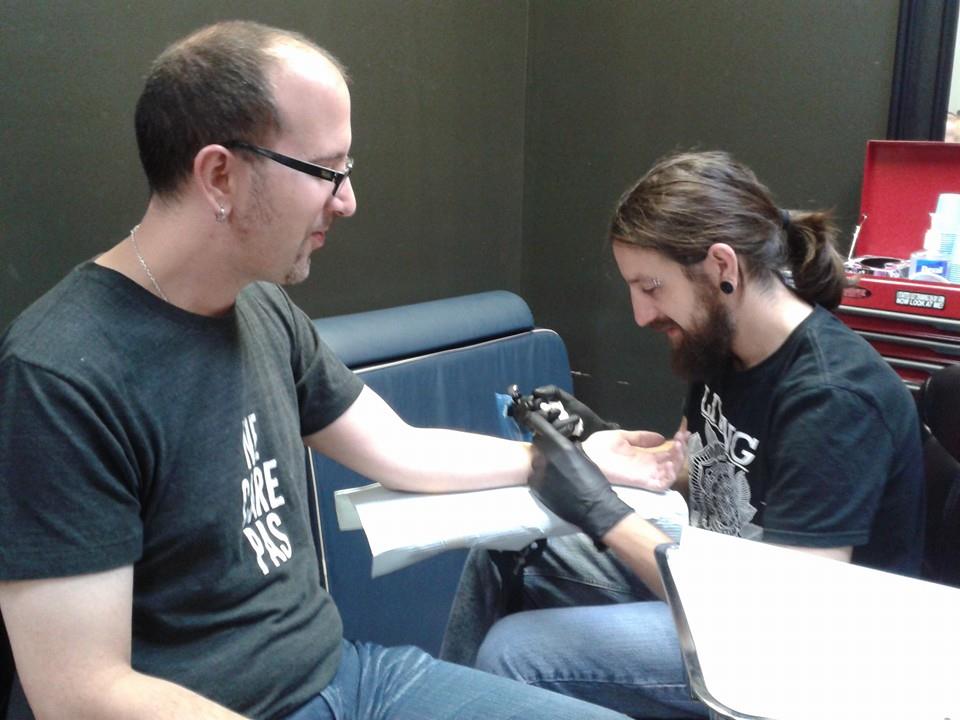
The Deathly Hallows – The Story Behind My New Tattoo
 Why a tattoo of the Deathly Hallows symbol?
Well, people would assume it’s because I’m a fanboy. They would be right. I’ve loved the Harry Potter series since the first book came out in paperback (I was a little late to the bandwagon).
I’ve read them countless times; well, I stopped counting when I read the seven books in the series when I read them for the fortieth time. I’ve read the books many more times since then. I think it’s around sixty times by this point.
When my boyfriend took me to The Wizarding World of Harry Potter, it was a nerds dream come true. I still can’t process everything I saw and the whole trip feels as if it was a dream, even though I have photographic evidence of being there!
I have three four editions of the books (ebooks, Canadian paperback and hardcover and the US hardcover editions). I have three Harry Potter mugs, two Harry Potter scarves, a Harry Potter wand. I have a wearable time turner and a Deathly Hallows pendant. I have seven Harry Potter themed t-shirts, a Gryffindor crest and belt and more.
So, why a tattoo of the Deathly Hallows symbol? When I got my second tattoo, Harry  Potter’s scar on my right wrist, people assumed it was just a fanboy thing. However, it was more than that. It meant more to me than just the joy that Harry Potter brought me. Harry was marked at birth to die, but rose above everything.
To me, it meant that we are not defined by our scars. Regardless of what happens in our past, we, too, can rise above it.
With the Deathly Hallows symbol, the purpose behind it is threefold. It’s a fanboy tattoo, yes, of course it is. It’s also a reminder of my recent trip to The Wizarding World of Harry Potter which was a birthday present from my boyfriend (who wins the Boyfriend of the Century Award for sure!).
More than that, it has a deeper meaning.
When I was hit with the MS last year, I felt as if I had died. I withdrew from everyone, from society, from life. I couldn’t walk, couldn’t see, and would have quite happily (at the time, mind you) died. I was in a bad way. For most of May, I considered taking my own life.
I was suffering from depression and trying to come to terms, however shakily, with the way my body and my mind were now. I had become someone I didn’t know how to live anymore. I wasn’t going out except when I got better to go to work. I didn’t go out with friends, didn’t really leave my apartment for anything except essentials. I was lost. It was like I had died, had already taken my own life for all that I was living the one I had. Which was not at all.
In June of 2013, after a very dark month, I made the choice to live. The fact that I had come close to quitting, to letting go…well, that frightened me. I wanted to live, even in this new body I didn’t understand. From that moment, I did everything I could do to go out into the light.
I reconnected with friends and started taking classes that would better my spirit like Tarot, Reiki and Manifestation. I started eating healthier, started walking more, even with my cane. For me, 2013 was a very long year, but it ended on a high note. I spent Christmas with my Mom and Dad, surrounded by love, comfort and joy. I had, figuratively speaking, come back from the dead.
When I got my Scar tattoo in 2007, I originally wanted to get the Deathly Hallows symbol on my right wrist. I decided at the last moment that I didn’t want something with death in it’s name on my body.
Fans of the books and movies will know that the one who possesses all three Deathly Hallows (the Elder Wand, the Resurrection Stone and the Invisibility Cloak) becomes the master of death. Having survived my own “death”, it seemed like a good time as any to give myself a symbol, a visual reminder of how far I’ve come.
The Lights of Shangri-La – A Review
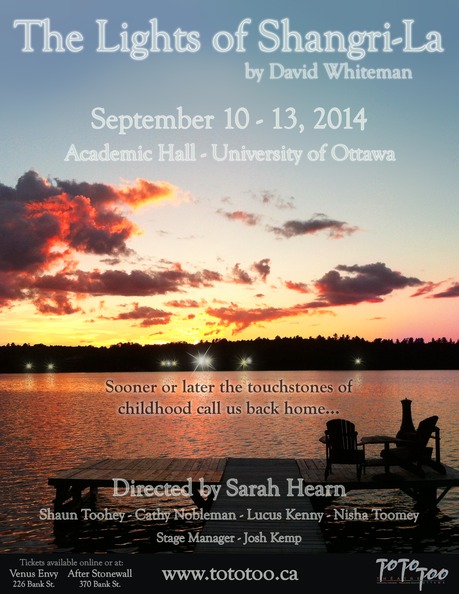
Sooner or later, the touchstones of childhood call us back home…
I had the immense pleasure of seeing the opening night of The Lights of Shangri-La last night. It was glorious in every sense of the word.
It’s the new play being put on by Toto Too Theatre. The Lights of Shangri-La is by David Whiteman. It features performances by Sean Toohey as Crockett Sumner, Cathy Nobleman as Pen Sumner (Crocket’s sister), Lucas Kenny as Ilya Petrov (Crocket’s estranged lover) and Nisha Toomey as Maddy Sumner (Pen’s daughter).
The Light’s of Shangri-La is about Crocket and Pen. Each have something that they are keeping close, secret from everyone that loves them. It’s making relationships difficult, strained. Both Crocket and Pen yearn for the days when they were younger, when there wasn’t a care in the world. Who doesn’t dream of their youth and the magic it held?
David Whiteman has penned a play that manages to do the impossible: The Lights of Shangri-La funny at times, heartfelt and mysterious until everything underneath the surface is revealed. It manages to tap into very real emotion that everyone can relate to in some way; and yet it is never sacharine, never over the top, never mundane. Instead, he’s written a play that taps into the depth of emotion and it left me breathless.
This is mainly due to the actors. Sean Toohey as Crocket is a firecracker of an actor. He taps into hilarity, despair and nostalgia in equal measure. He’s taken what could have been played as an over the top character and given Crocket an incredible amount of heart. More than that, Toohey made Crocket real for me.
I was in awe while watching Cathy Nobleman’s performance as Pen. She has an incredible range of emotions to portray and did so with aplomb. She taps into every nuance of Pen’s character. More than any of the other characters, she spoke to me the most. Again, Nobleman could have played the role very over the top or sympathetic to the extreme. The fact that she didn’t and I came away loving Pen is a tribute to the amazing performance that Nobleman gave.
The supporting cast was also stellar. Nisha Toomey as Maddy was lovely and a treat to watch on the stage. She owned that role, every word of it. However, it was Lucas Kenny as Ilya Petrov that really wowed me. As the character with the least amount to say, Kenny has a lot to work to do. He has to convey many emotions, from frustration to remorse with very few words.
I’ve known quite a few men like Ilya, men who made every word they said count. Kenny played him perfectly. Again, he could have done an over the top performance, full of anger and angst. Instead, he chose to play Ilya soft and quiet. You listen when he speaks. You ache for him. Without saying a lot, Lucas Kenny brings Ilya Petrov to life. Ilya is the perfect flip side to Crocket, who’s more flamboyant and flippant.
Sarah Hearn has directed one hell of a play. In a less capable directors hands, The Lights of Shangri-La could have been all camp and no substance. Instead, she has brought out the depth and soul of each of the characters. From the moment the play begins to it’s glorious ending, she has handled the helm of a show that left me spellbound. Everything in the play worked, from the gorgeous set (designed by David Magladry) to the music (an original score by Mike Heffernan) the entire show is a delight.
By the end of The Lights of Shangri-La, I was emotionally spent, I was in awe at how powerful it was. More than that, I knew these people. They had stopped being actors or characters on the stage and instead became real people.
I loved every minute of this beautifully executed play. There are only four more performances left and I urge you to go and see it. To watch The Lights of Shangri-La is to be transported to another place and I didn’t ever want to leave.
Get your tickets here: http://www.tototoo.ca/tickets.html
And watch the trailer below!
The Huff Stuff!
 Hey Everyone!
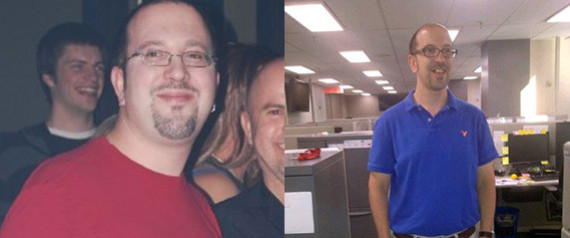
How cool is this? An article I wrote on weight loss and it’s been published in The Huffington Post!
I don’t like writing about myself, but it’s a challenge that I engage in regularly. Readers of my blog dealing with having Cerebral Palsy and Multiple Sclerosis will know this. You can read Two Steps at a Time here: http://www.two-steps.org
This is the first time I’ve written about my weight loss. When I wrote it, I called it Rebuilding the Temple. I’ve lost 140 pounds on the path to find myself. It took five years to do it, but I did it!
You can read it here:
http://www.huffingtonpost.ca/2014/09/09/weight-lost_n_5790924.html
I hope you enjoy it!
Candlelight and Three Simple Words – A Poem
You have lit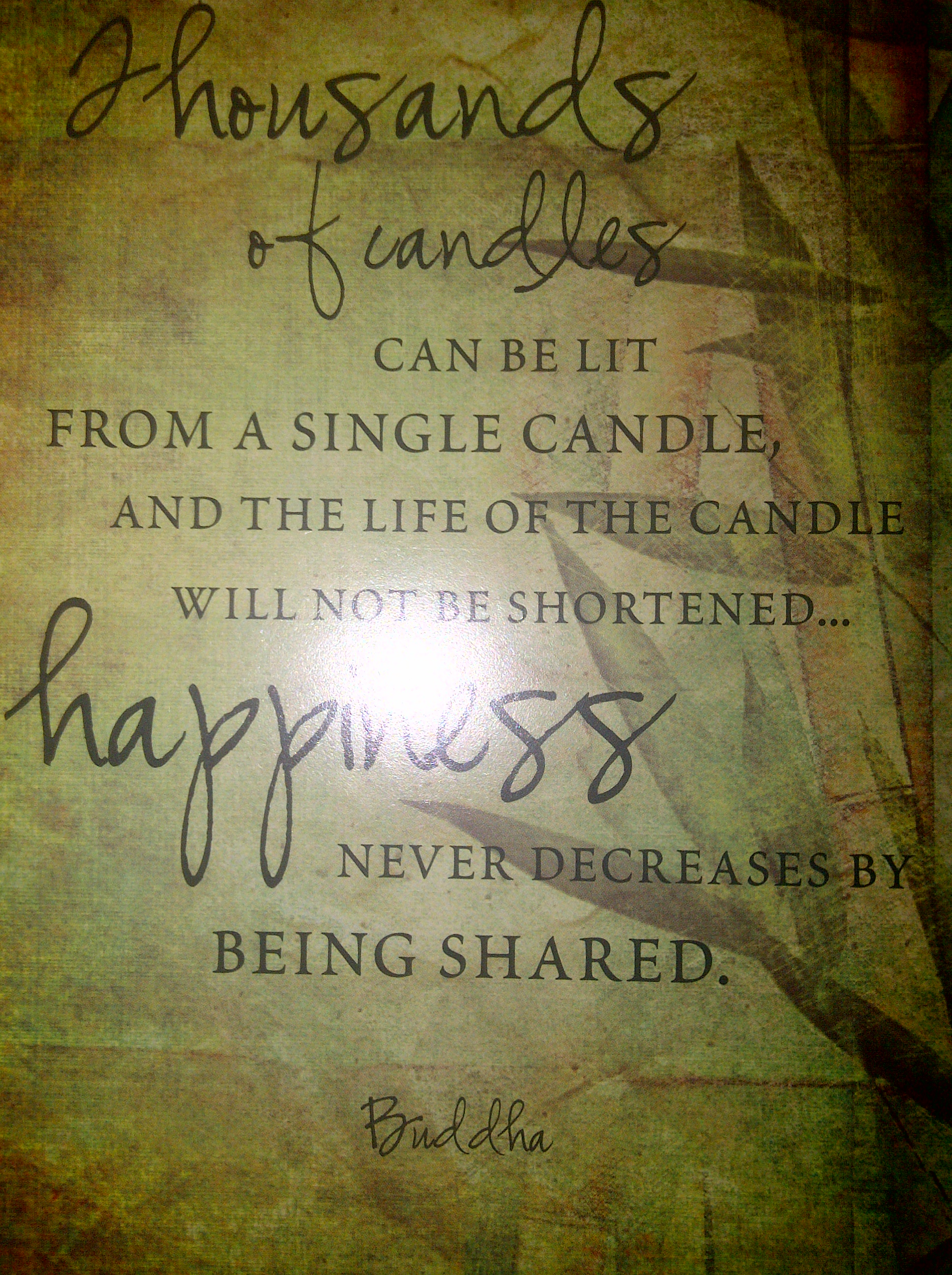
a candle inside
of me. With
every touch, each
caress, each brush
of your lips
against mine,
the flame grows.
I had thought
the flame to
be extinguished, only
a mere finger
of smoke that
moved and undulated
inside me. Now,
the tiny tongue
of flame is
a light all
its own inside
of me. Every
time you tell
me those three
simple words with
a precious magic
all their own,
(I love you)
each word like
a caress along
my heart, the
flame grows brighter
still until I
am filled to
the brim with
love and light
for you.

Buy Little Yellow Magnet from Amazon and Kobo!
Jamieson Wolf has written a compelling story about navigating multiple sclerosis and cerebral palsy. His story will touch your heart, make you cry, then laugh, and inspire you. A touching memoir with a bit of magic…and tarot! ~ Theresa Reed, author of The Tarot Coloring Book

